
Private Yoga Classes vs. Studio Classes: Why One-on-One Yoga Changes Everything
By Yoga Team UK | Estimated read time: 6 minutes
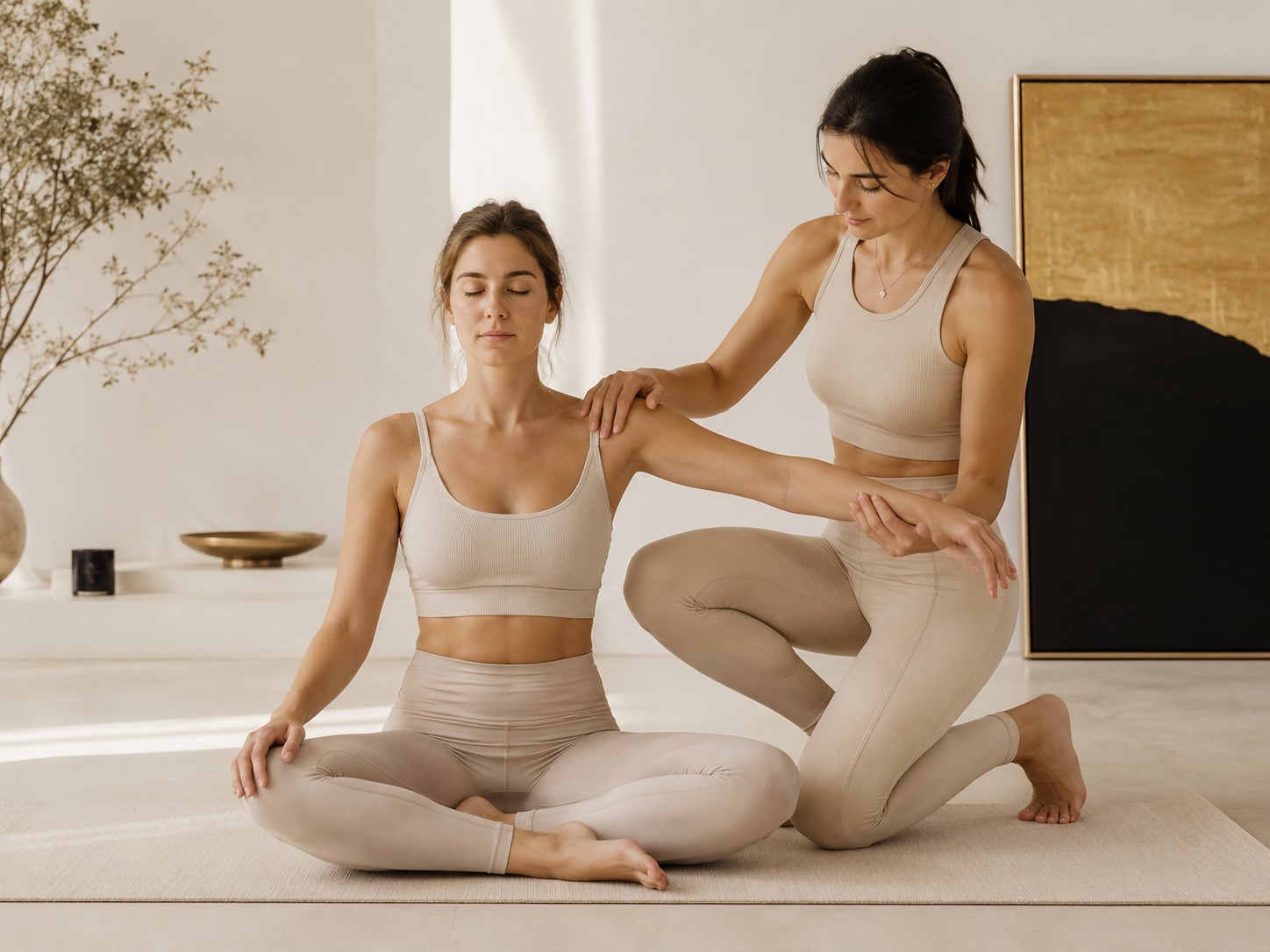
Are private yoga classes better than studio classes?
Private yoga classes offer a level of personalisation that group studio classes simply cannot match. With one-on-one instruction, your teacher tailors every sequence, alignment cue, and breathing exercise specifically to your body, goals, and experience level.
Key advantages include faster skill progression, safer practice for those with injuries or health conditions, flexible scheduling, and the ability to explore yoga's deeper dimensions — breathwork, meditation, and nervous system regulation — beyond what a 60-minute group class allows.
For most people, private sessions are especially valuable at the start of their yoga journey, after an injury, or when progress in group classes has plateaued. Many students combine occasional private sessions with self-practice for the best long-term results.
There's a moment most yoga students know well. You're in a packed studio class, you can't quite hear the teacher over the music, your neighbour's mat is six inches from yours, and you're somewhere between Warrior II and mild confusion. It's fine — it's yoga, after all, and any yoga is good yoga. But it's not quite the transformative experience you signed up for.
Private yoga classes in London offer something fundamentally different: a practice built entirely around you. Not the 20 other people in the room, not the timetable, not the teacher's favourite sequence. Just you, your body, your goals, and an expert guide dedicated entirely to your progress.
If you've ever wondered whether the investment in private yoga tuition is worth it, this guide will walk you through exactly why thousands of people — from complete beginners to advanced practitioners — are choosing one-on-one yoga sessions over the studio model.
Key Takeaways
- Alignment is everything. Private instruction corrects poor habits before they cause injury — something group classes simply can't guarantee.
- Progress is measurable and intentional. Each session builds on the last, with your teacher tracking and adapting to your specific development.
- Injuries and health conditions are accommodated. Private yoga can be genuinely therapeutic in ways group practice cannot, with modified sequences designed around your body.
- You set the schedule. Sessions happen on your terms — at home, outdoors, in-studio, or online — removing every barrier to consistent practice.
- Yoga goes deeper than postures. Private sessions give space to explore breathwork, meditation, and nervous system regulation that group classes rarely reach.
- It suits every level. From first-time practitioners to advanced students, private tuition accelerates progress at any stage of the journey.
- A blended approach works well. Even one private session per month alongside self-practice keeps your technique accurate and your goals on track.
The Personalisation Gap in Group Classes
Studio yoga classes are designed for the average participant. The sequencing, the pace, the level of instruction — all of it is calibrated for a room full of mixed abilities, histories, and bodies. That's not a criticism; it's simply an unavoidable reality of group teaching.
The result is that almost no one in a group class is getting the instruction they actually need. Beginners are left guessing at alignment. Intermediate students plateau because no one is pushing them in the right direction. Those with injuries or chronic conditions often spend most of class modifying — sometimes incorrectly — without real guidance.
A private yoga teacher flips this completely. Your sessions are structured around your goals, whether that's building strength, improving flexibility, managing stress, recovering from injury, or deepening a meditation practice. Every pose, every breath cue, every transition is chosen with your body in mind.
Top Benefits of Private Yoga Classes
1. Correct Alignment From Day One
Misalignment in yoga isn't just ineffective — it can be genuinely harmful. Rounding the lower back in forward folds, collapsing the knee in Warrior poses, or compressing the neck in shoulder stands are all common in group classes, where a teacher simply can't check 20 bodies simultaneously.
In a private class, your teacher watches every movement. Poor habits are corrected before they become ingrained. This matters enormously for long-term joint health and for the integrity of your practice.
2. Genuine Progress, Not Just Participation
In a group class, you show up and do what's on the plan. In a private class, each session builds on the last. Your teacher tracks what's working, where you're stuck, and adjusts accordingly. The progression is intentional — not accidental.
Students working privately tend to advance significantly faster than those in group classes alone. What might take 18 months in a studio can unfold in 6 months of consistent private practice, simply because the instruction is targeted.
3. A Safe Space for Injury, Illness and Recovery
If you're managing a bad back, a post-surgical knee, hypermobility, scoliosis, or any number of chronic conditions, group yoga can feel like navigating a minefield. Teachers in studio settings rarely have time to provide the modified guidance you need.
Private yoga offers the space to work therapeutically. A qualified teacher will adapt postures, use props intelligently, and design sequences that support your body rather than strain it. For many people with physical limitations, private yoga is the only truly safe way to practice. Learn more about private physiotherapy pilates in London and private therapeutic yoga in London.
4. Flexibility of Time, Place and Style
Your schedule is yours. Private yoga happens on your terms — early morning before the school run, during a lunch break, or at the end of a long working day. Many private teachers offer home visits, outdoor sessions, or online coaching, removing every logistical friction point that keeps people from practising consistently.
Style is equally flexible. Want to focus on restorative yin yoga this month and shift to dynamic vinyasa next? A private teacher follows your lead rather than sticking to a fixed class format.
5. The Depth of Practice That Group Classes Rarely Reach
Yoga is not just physical exercise. It encompasses breathwork (pranayama), meditation, philosophy, and a sophisticated understanding of how the nervous system responds to movement and stillness. In a 60-minute group class, there's rarely room to explore these dimensions.
Private sessions can go deeper. You might spend a session working through breathing techniques that reduce anxiety, or understanding how specific poses affect your vagal tone. This is yoga as a complete practice — not just a workout with stretching.
Who Benefits Most from Private Yoga?
Private yoga isn't only for those with injuries or deep pockets. It's genuinely valuable for:
Complete beginners who want to learn the fundamentals properly before joining group classes
Experienced practitioners who've plateaued and want to break through to new depth
Athletes using yoga for cross-training, mobility work, or recovery
Executives and high-performers who need stress management techniques that are efficient and evidence-based
Prenatal and postnatal women who need tailored, safe practice during significant physical transitions
Anyone returning to yoga after a gap or an injury
The Investment Question: Is Private Yoga Worth the Cost?
Private yoga sessions cost more per class than a studio drop-in. That's simply true. But the cost comparison isn't quite that simple.
Consider how many studio classes go only partially used — because the level isn't quite right, the sequence doesn't address your needs, or you pick up a habit that later needs correcting. When every minute of a private session is directly relevant to your progress, the value per pound is often higher than it first appears.
Many students find a blended approach works well: one or two private sessions per month alongside regular self-practice or occasional group classes. The private sessions act as a compass, keeping your practice accurate and progressing. The other practice builds consistency.
Yoga Team offers private and semi-private yoga sessions tailored to your goals, schedule, and experience level. Get in touch with our client concierge for a personalised teacher recommendation.
Frequently Asked Questions
Private yoga sessions generally range from £60–£120 per session in the UK, depending on the teacher's experience, session length, and whether they travel to you. While this is more per session than a studio drop-in, the targeted instruction often means faster progress and fewer wasted sessions — making the overall value compelling for many students.
Absolutely — beginners arguably benefit most from private instruction. Learning correct alignment, breath coordination, and foundational poses from the outset prevents bad habits that can take years to undo. A private teacher can also address any nervousness or self-consciousness that might hold a new student back in a group setting.
Yes — in many cases, private yoga is the safest and most effective option for people managing injuries or chronic conditions. A qualified teacher will assess your specific situation, modify poses where necessary, and design a therapeutic sequence that supports recovery rather than risking aggravation. Always inform your teacher of any medical history before your first session.
For most students, one to two private sessions per week alongside regular home practice delivers excellent results. Those using yoga therapeutically — for injury recovery or mental health support — may benefit from more frequent sessions initially. Many students also find a blended model effective: monthly private sessions to calibrate their practice, supplemented by self-practice between sessions.
A private session is one-to-one: you and your teacher. A semi-private session typically involves two to four students, often friends, partners, or colleagues who share similar goals. Semi-private classes offer more personalisation than a studio class at a lower cost per person than a fully private session — a popular middle ground for many students.
Yes — online private yoga sessions via video call are widely available and work surprisingly well. Your teacher can still observe your alignment, provide verbal cues, and design your session in real time. Online sessions remove travel barriers entirely and are a practical option for busy schedules or students who travel frequently.